

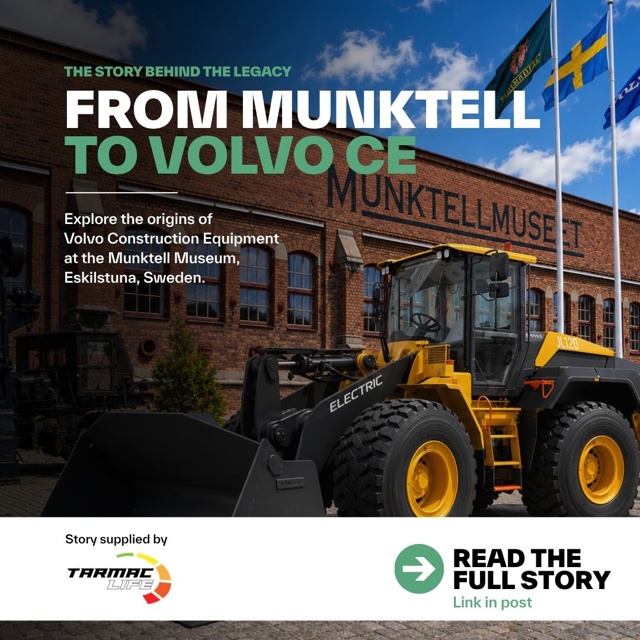
Tucked away in the quaint Swedish city of Eskilstuna lies a museum that tells one of industrial history’s most compelling stories. The Munktell Museum, or “Munktellmuseet,” showcases innovation, engineering excellence, and the pursuit of technological advancement. It’s also where the extraordinary journey of Volvo Construction Equipment began, nearly two centuries ago.
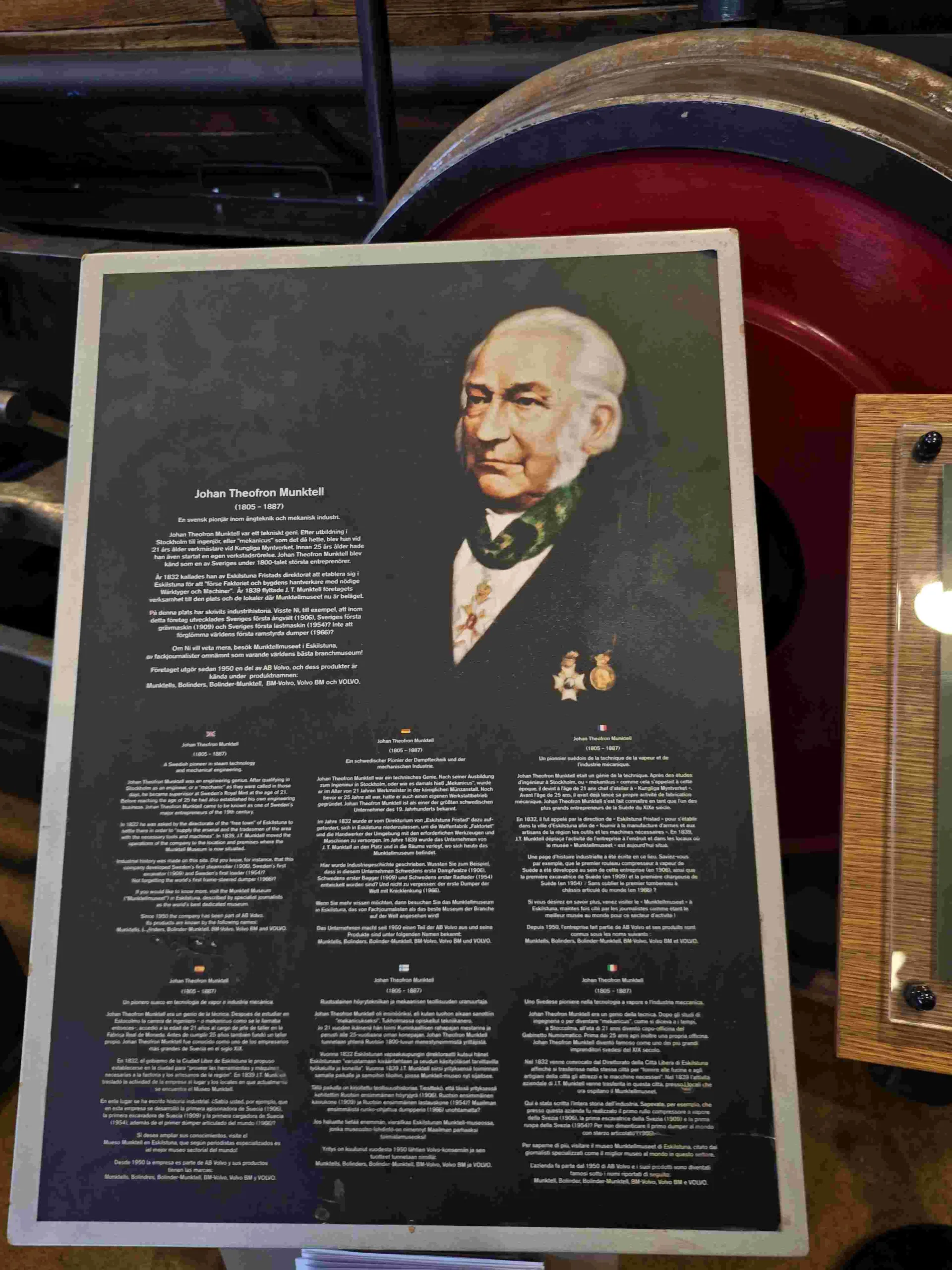
The Visionary Founder – Johan Theofron Munktell
Every great story needs a visionary at its heart, and Johan Theofron Munktell was precisely that. Born on March 20, 1805, in Kärrbo, Vastmanland County, Munktell would become one of Sweden’s most influential entrepreneurs of the 19th century.
After qualifying as an engineer in Stockholm (in those days known as a “mechanic”) Munktell’s trajectory was nothing short of meteoric. By the age of 21, he’d already secured a position as supervisor at Sweden’s Royal Mint, demonstrating an aptitude for precision engineering and management that would define his career. Before reaching 25, he’d established his own engineering business, setting the stage for decades of innovation.
In 1832, the directorate of Eskilstuna’s “free town” recognised Munktell’s talents and invited him to settle there to supply the arsenal and the tradesmen of the area with the necessary tools and machines.
Seven years later, in 1839, Munktell relocated his operations to the exact location where the Munktell Museum stands today, a site that would become the birthplace of Swedish industrial innovation.
A Hotbed of Innovation
What makes Munktell’s workshop remarkable isn’t just that it existed, but what it produced. The company became a powerhouse of industrial achievement, pioneering technologies that shaped entire industries.
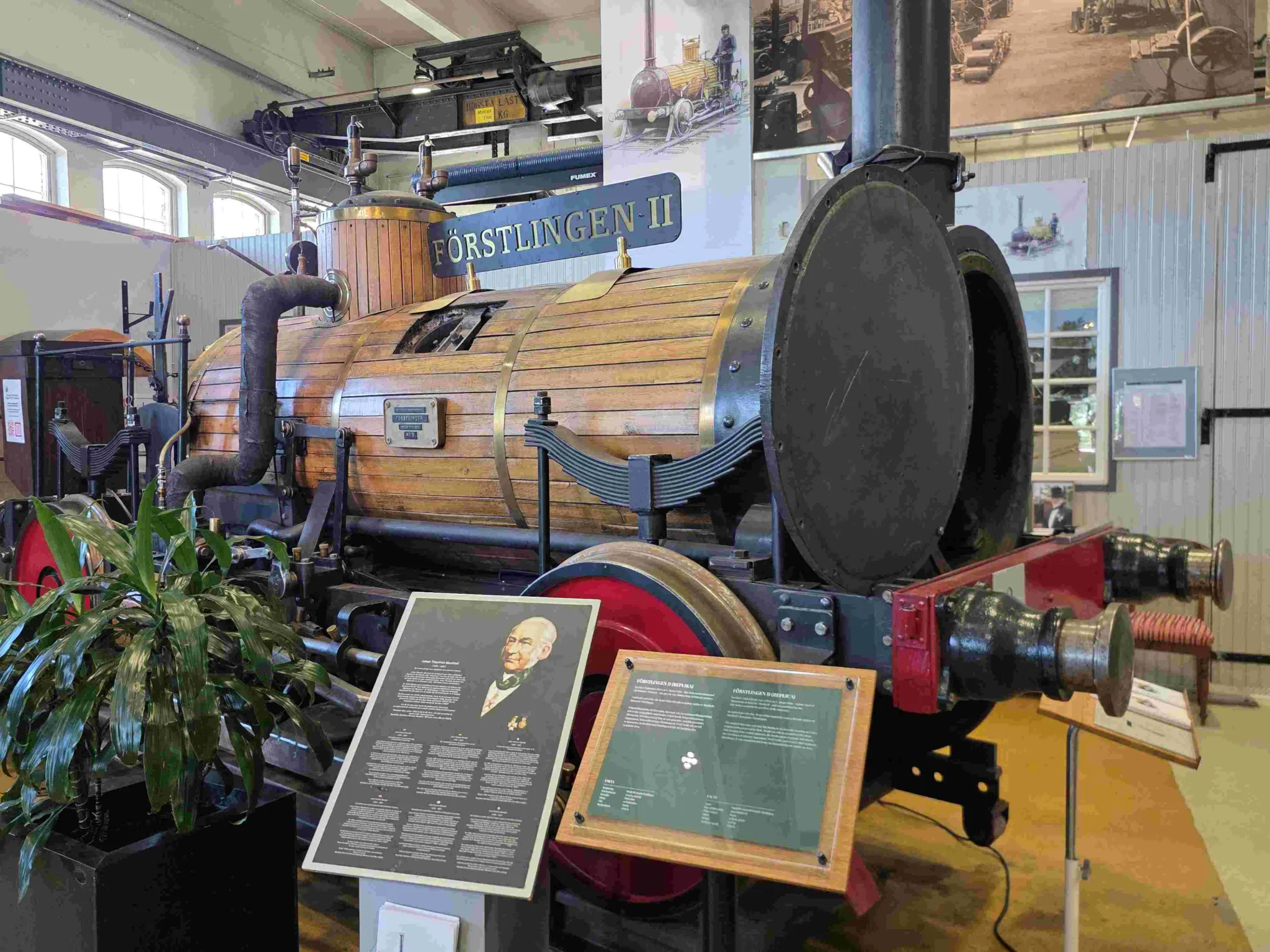
In 1853, Munktell’s mechanical workshop created something truly revolutionary, Sweden’s first steam locomotive, named “Förstlingen.” It represented a tremendous leap in technology.
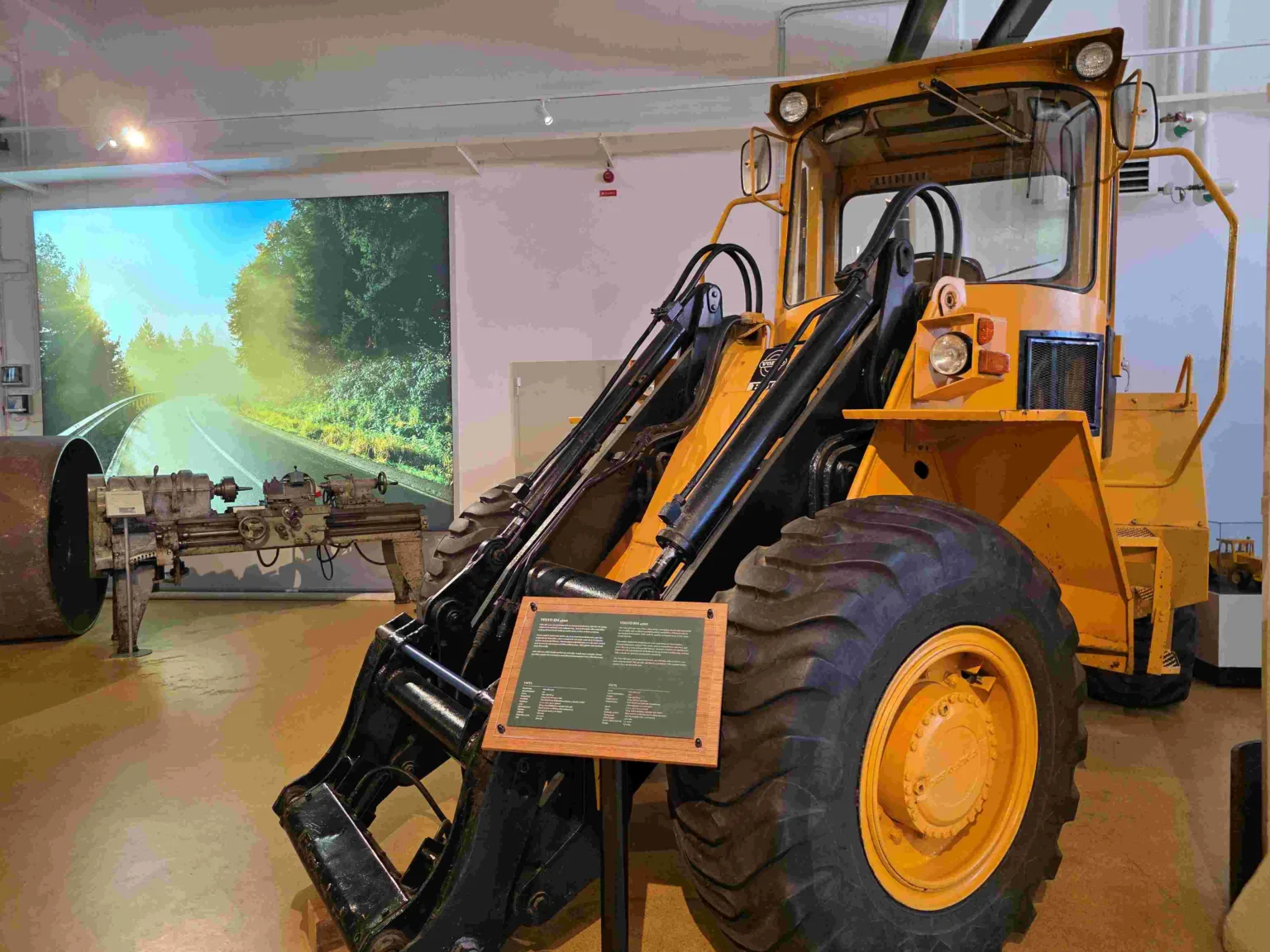
The development of steam engines and boilers demonstrated Munktell’s mastery of the mechanical principles that would define the industrial age. But Munktell wasn’t content to stop there. The company continued innovating, eventually producing Sweden’s first steamroller in 1906, a wheel loader in 1954, and even the world’s first frame-steered dumper in 1966.
These were game-changing innovations that transformed construction and forestry industries worldwide.
The Broader Industrial Context
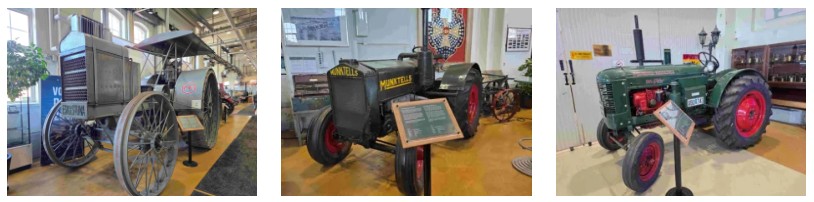
To understand Munktell’s significance, we need to grasp the broader transformation Sweden was experiencing. During the second half of the 19th century, Sweden underwent its first significant industrialisation breakthrough. The economy shifted from textile industries toward ironworks and sawmills, while land reforms streamlined agriculture and improved living standards.
By the 1890s, the Swedish economy had gained remarkable momentum. This growth was fueled by several factors, an overpopulated labour market that provided cheap workforce availability, abundant natural resources in the form of forests and ore, and international demand for these commodities.
Sweden developed what historians call “ingenious industries” technologically advanced sectors that offered significant export opportunities. Workshops and factories sprouted throughout the country, though not all survived the competitive landscape.
The Bolinder Connection and Merger
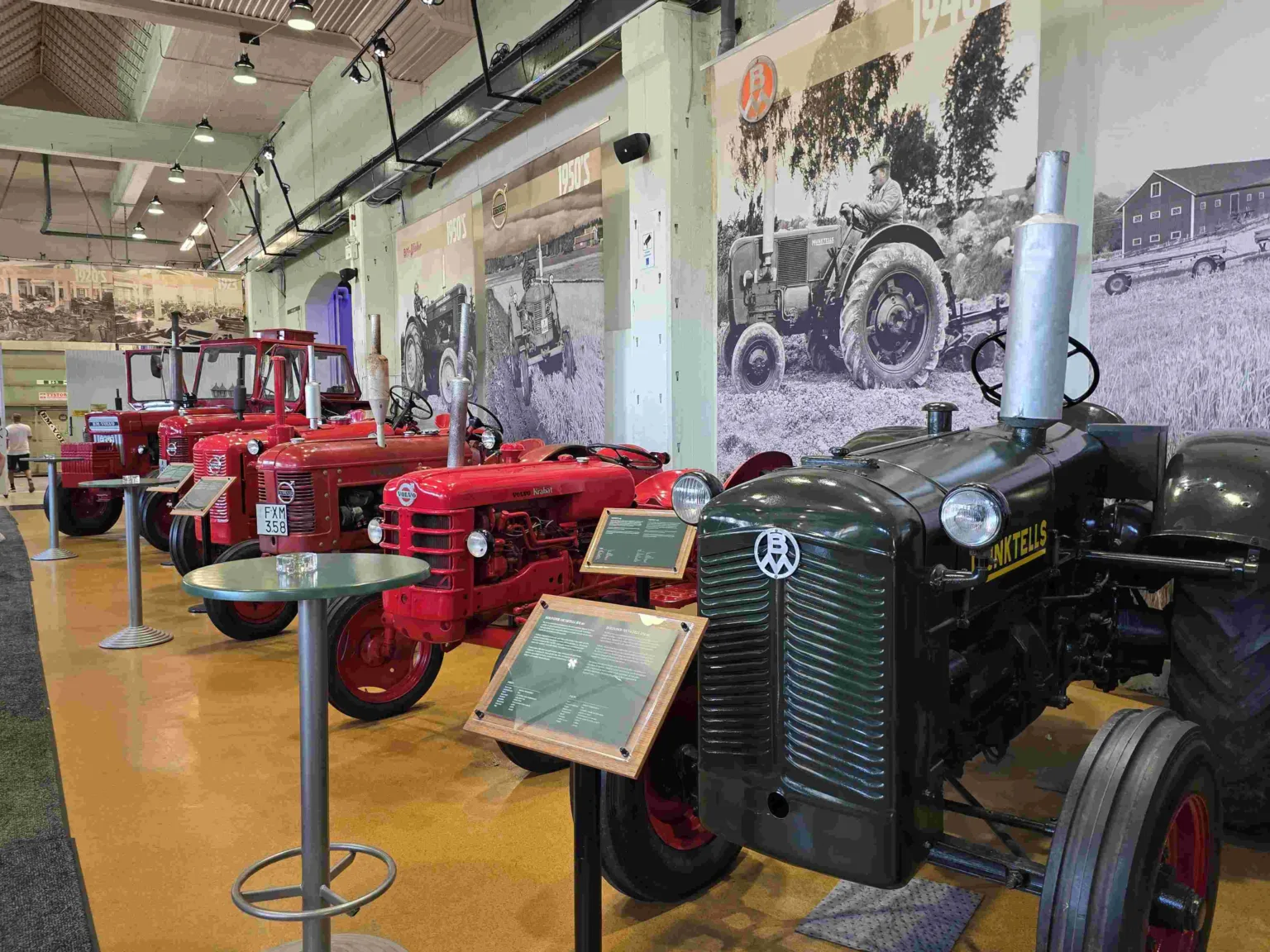
While Munktell was establishing his reputation in Eskilstuna, another engineering dynasty was rising elsewhere. In 1844, brothers Jean and Carl Gerhard Bolinder founded the Kungsholmen Foundry & Machine Workshop in Stockholm. They became world-renowned, particularly for constructing the world’s first submarine and developing revolutionary combustion engines that would significantly impact the Swedish forestry industry.
For nearly a century, Munktell and Bolinder operated separately, each pursuing their own path to innovation. However, the tide of history was turning.
In 1932 (exactly 100 years after Munktell came to Eskilstuna) these two titans of Swedish engineering merged into a single company. This was a strategic union of two companies that shared a vision for the future, driven by their incredible curiosity to push technology forward during a period of explosive new needs.
The Volvo Era Begins
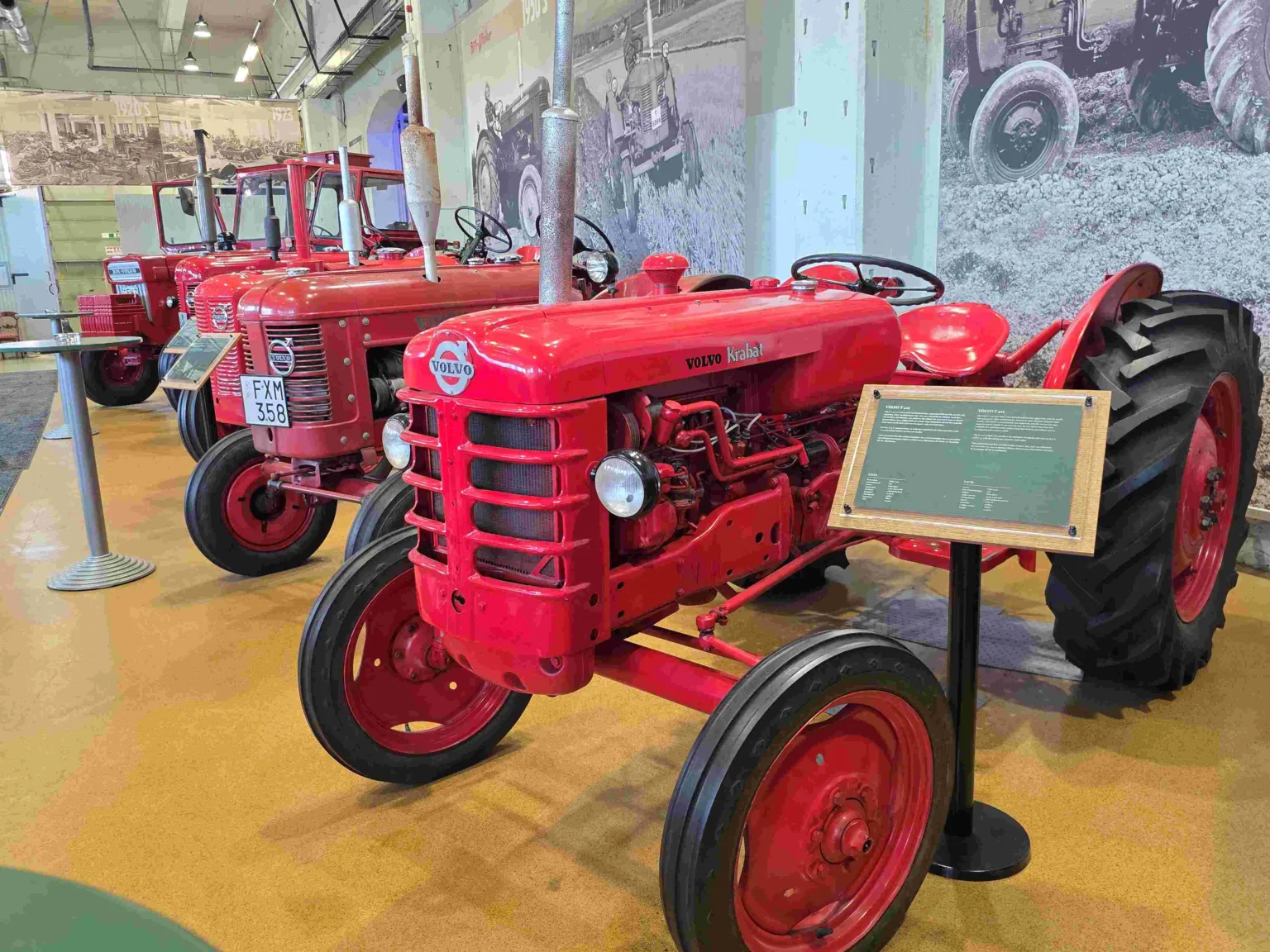
The merger of Munktell and Bolinder couldn’t have been better timed. Just five years later, in 1937, the Volvo company was founded with values that echoed Munktell’s pioneering spirit, a focus on innovation with human beings at the centre.
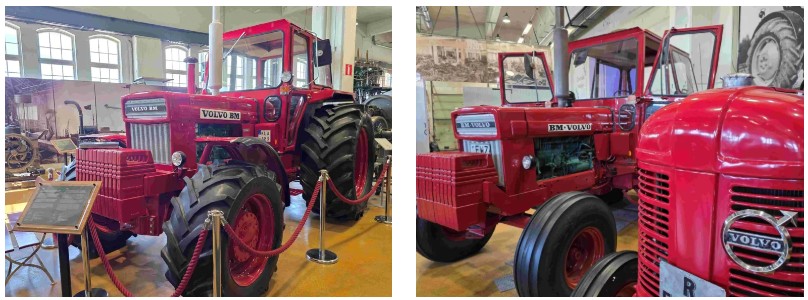
However, it wasn’t until 1950 that Volvo acquired Bolinder-Munktell entirely. The decision came at an opportune moment. Post-war Europe was rebuilding, and demand for tractors, harvesters, and advanced machinery for the increasingly mechanised forestry industry was skyrocketing. The acquisition positioned Volvo to capitalise on these enormous market opportunities.
Building Construction Equipment – The Wheel Loader Revolution
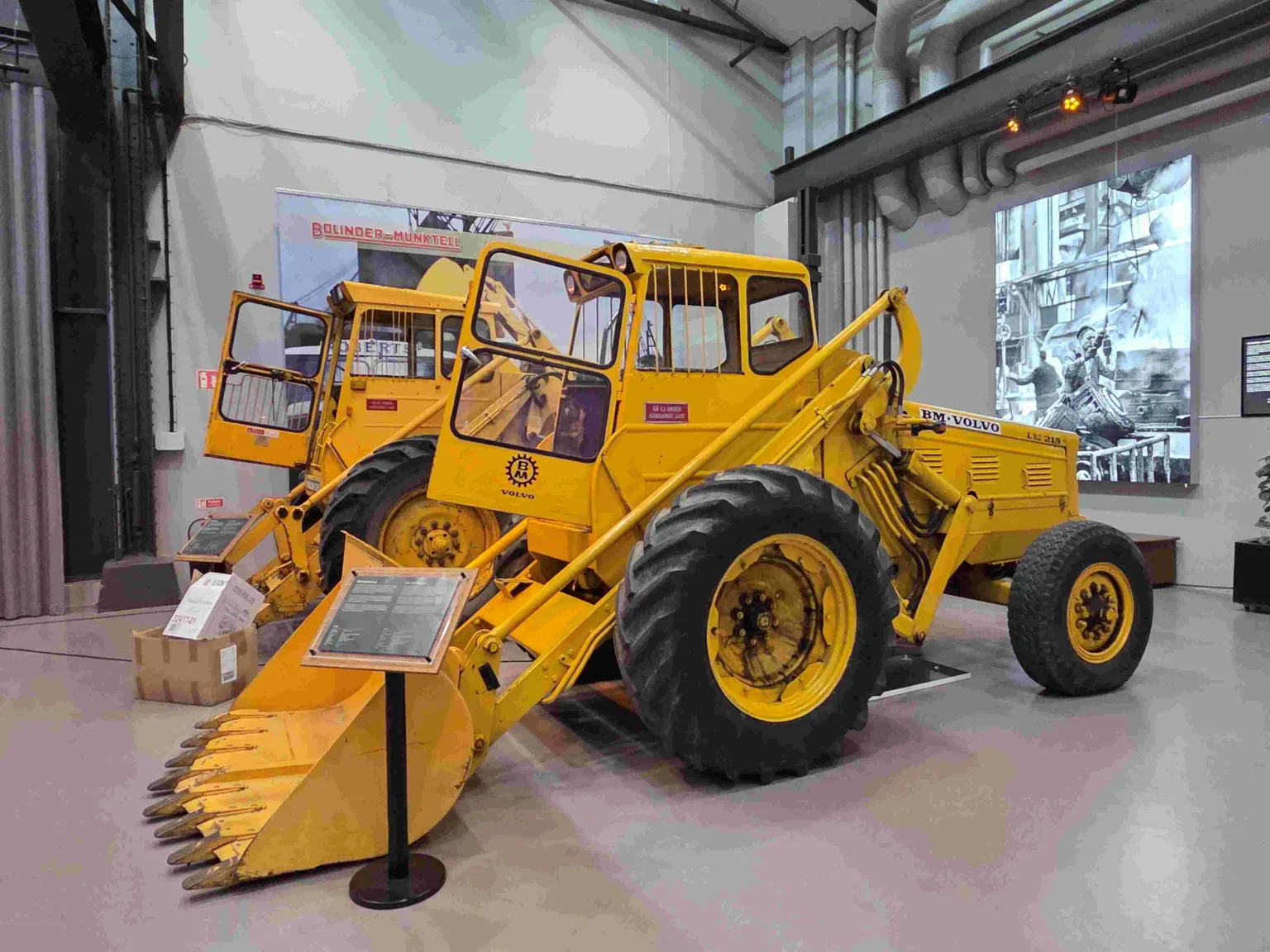
The true foundation of Volvo Construction Equipment was laid in 1954 with the introduction of the H10 wheel loader. This was a revolutionary concept built on tractor principles that would reshape the construction industry.
What made the H10 so successful? The company dared to question conventional wisdom. Rather than simply replicating existing designs, Volvo literally turned traditional perspectives (and tractors) around. This willingness to innovate, to challenge established practices, and to think differently became the hallmark of Volvo Construction Equipment’s approach.
From Bolinder-Munktell to Volvo BM to Volvo CE
As the company evolved, so did its identity. In 1973, Bolinder-Munktell officially changed its name to Volvo BM to reflect the change in ownership. However, they deliberately retained “BM” in the company name as a conscious connection to the history and legacy of Bolinder and Munktell, ensuring that the pioneering spirit of these founders remained central to the company’s identity.
The 1980s brought global ambition. In 1985, VME Group was formed, encompassing Volvo BM, Michigan, and Euclid through a partnership with American manufacturer Clark Equipment Company. This strategic move established them on the world stage and marked the beginning of their important worldwide positioning.
By 1995, the company had completed its identity transformation, officially becoming Volvo Construction Equipment (Volvo CE), a name that would come to represent one of the world’s leading construction equipment manufacturers.
The Modern Era – Sustainability and Innovation
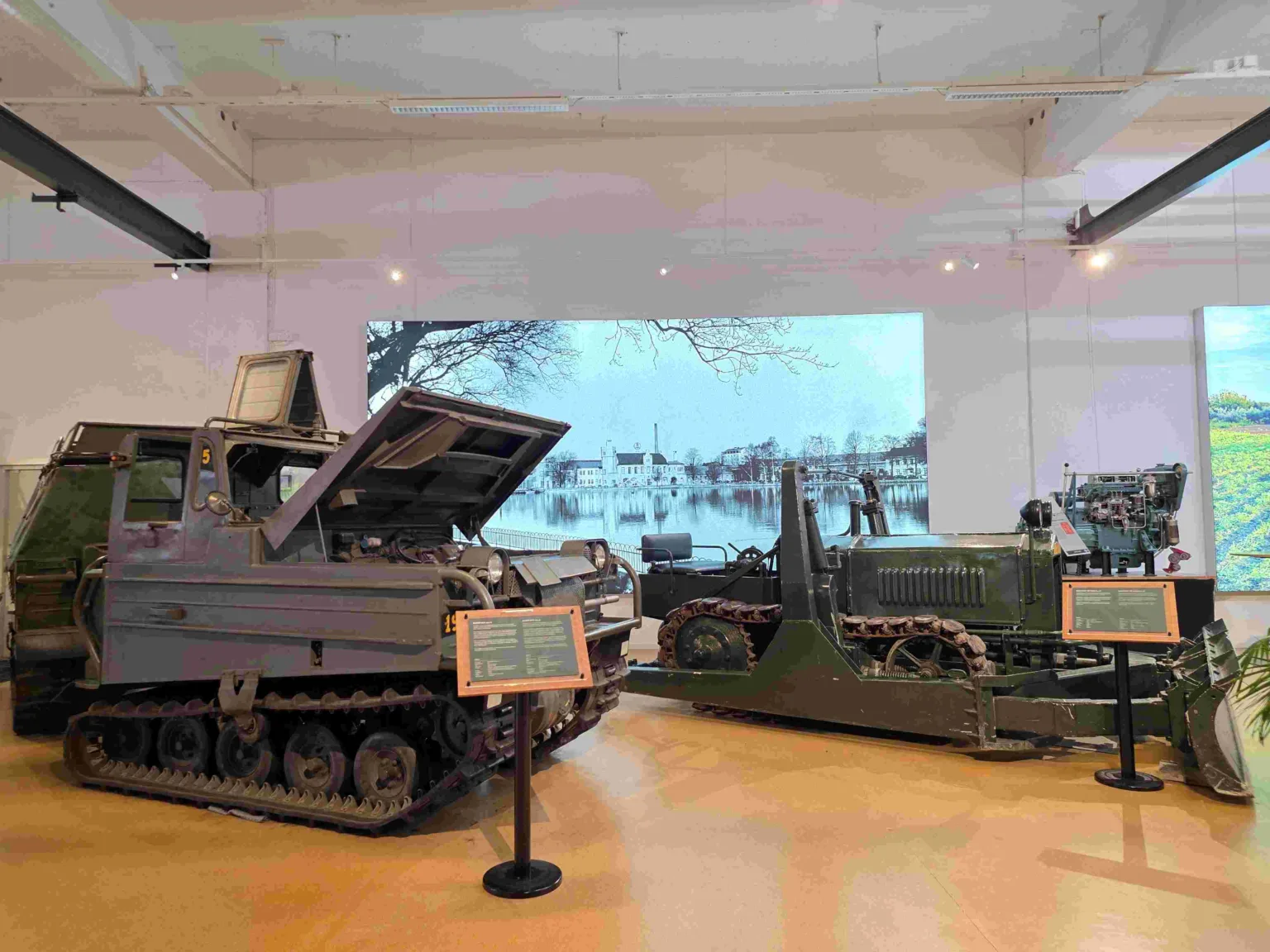
If Munktell was driven by the challenges of his time, modern Volvo CE faced (and continues to face) equally compelling imperatives. The 21st century brought new demands, environmental sustainability, electrification, and the transition to emission-free societies.
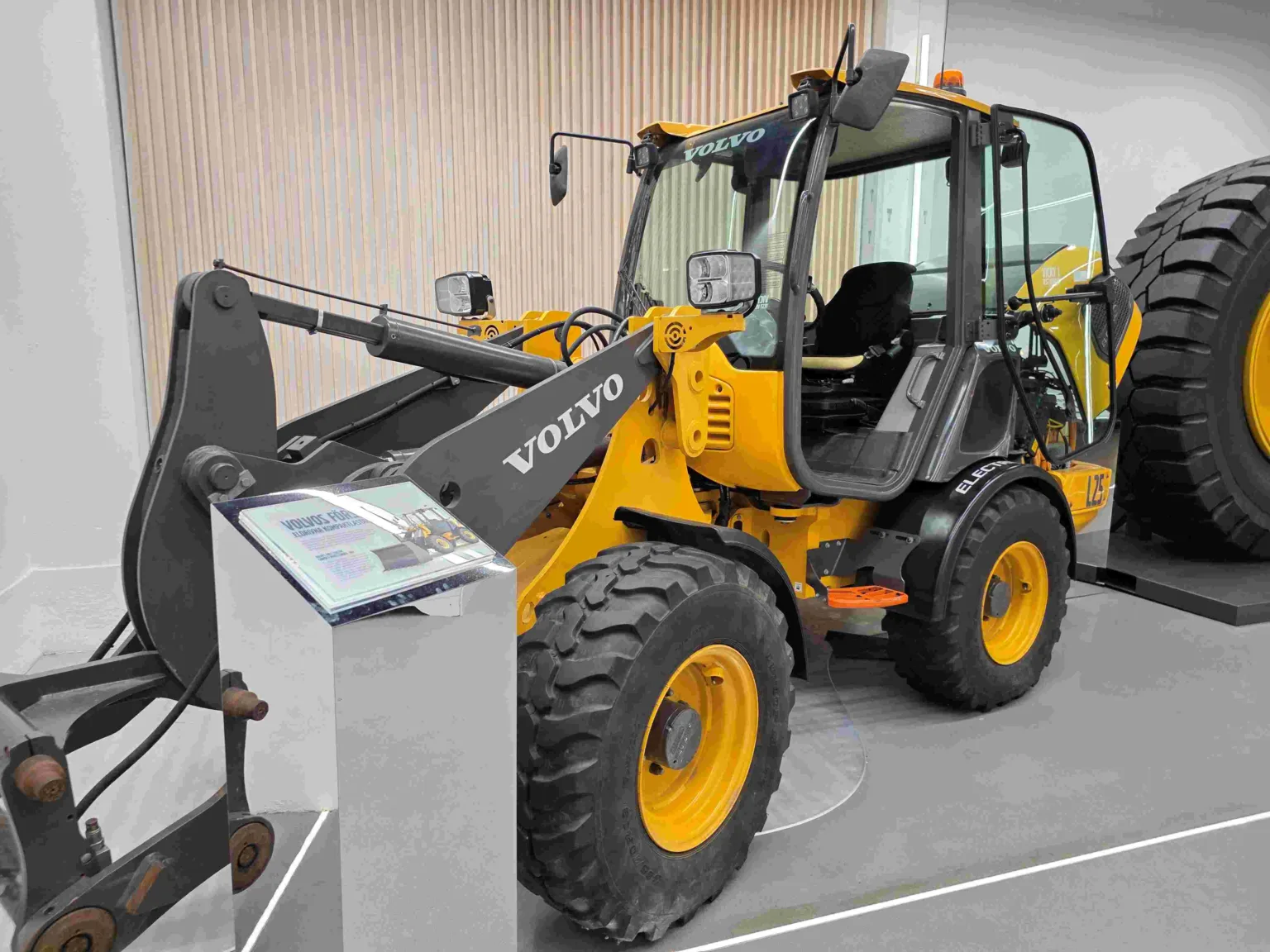
In 2016, Volvo CE unveiled prototypes for autonomous and fully electric construction machines, signaling their commitment to these global sustainability goals and strengthening their position as an innovative industry leader.
By 2020, they became the first manufacturer of construction machinery to fully commit to transitioning to electric compact machines, introducing a series of electric compact excavators and compact loaders with larger machines in development.
The innovation continued. In 2022, Volvo CE began exploring electrification through fuel cell technology, even testing the world’s first prototype of a hydrogen-powered articulated hauler.
Coming Full Circle – The 2023 Homecoming
In a poetic twist of history, 2023 marked a symbolic return to roots. Volvo CE’s global headquarters moved back to Eskilstuna, where it all began 191 years earlier. This represented an acknowledgment that the values, innovation spirit, and legacy of Johan Theofron Munktell remain absolutely central to the company’s identity and future direction.
The Munktell Museum – Where History Meets Future
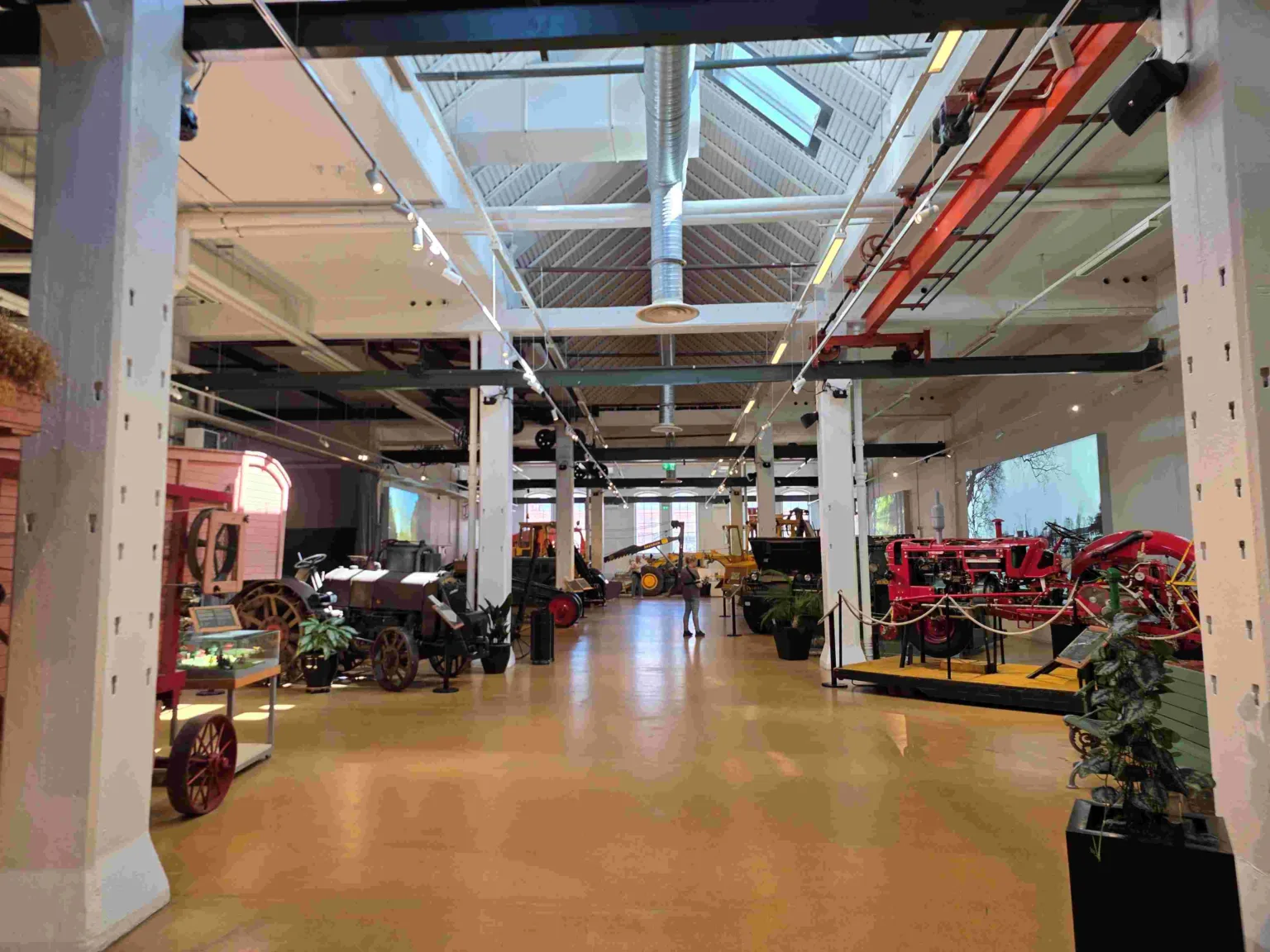
The Munktell Museum underscores the principle that “history and future meet”. The museum showcases not just the innovations of the past, but the philosophical continuity that connects Munktell’s era to today’s challenges.
The hopes and dreams of Johan Theofron Munktell (to build machines that serve society and to pursue innovation relentlessly) are precisely what drives Volvo Construction Equipment in the present day. As the company builds toward tomorrow’s sustainable future, it does so grounded in values of sustainability, innovation, and humanity, principles as vital now as they were nearly 200 years ago.
Tarmac Takeaway
The story of Munktell Museum and Volvo Construction Equipment is ultimately a story about human ingenuity. It’s about visionary engineers who looked at the world and asked not “how things are done,” but “how things could be done better.” From steam locomotives to electric haulers, from mechanical workshops to global manufacturing powerhouses, the journey spans two centuries yet remains driven by the same core principle – the relentless pursuit of progress in service to society.
When you visit the Munktell Museum, you’re not just looking at old machines. You’re standing in a place where the future was repeatedly invented, and where that same spirit of innovation continues to shape tomorrow’s solutions to today’s challenges.
Article and accompanying images supplied by Dave McLeod, courtesy of Tarmac Life. Read the full article here: https://bit.ly/3RLNmII